

4 Benefits of a Centralized Church Communication Process
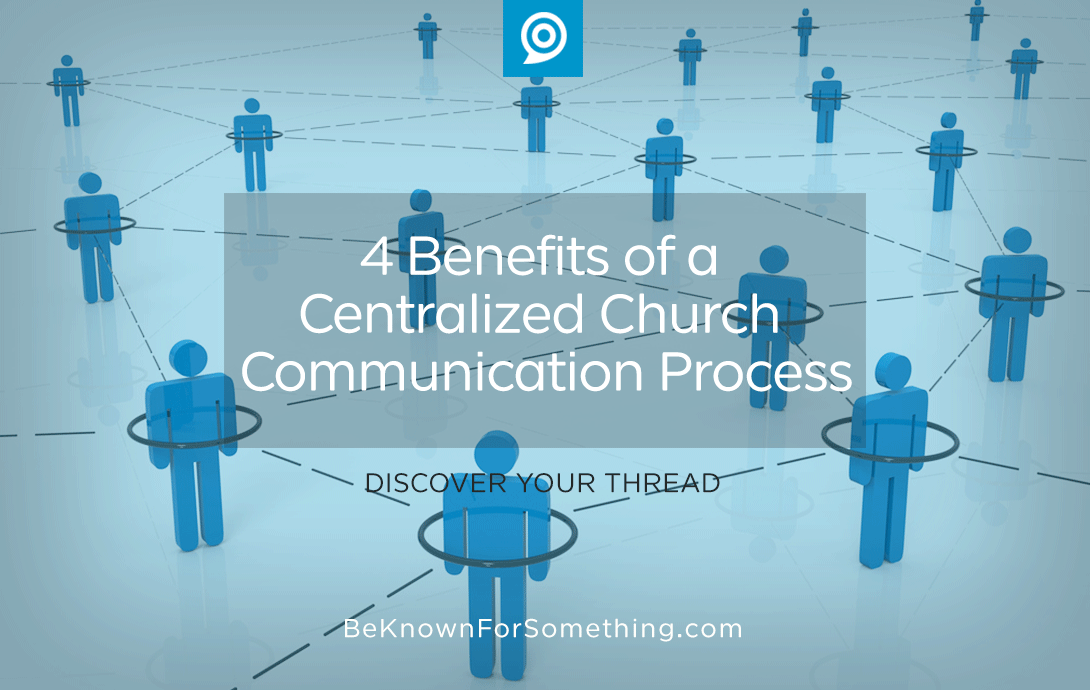
Most churches try 2 process structures to effectively communicate. Or a hybrid (as a third possibility). The choice is yours! It really doesn’t matter how many people are on your team either. It’s more about the flow of ideas and the production of the communication work.
Your 3 choices? Let’s examine them:
Decentralized: When all the individual ministries brainstorm and produce their own communication materials. They either do it themselves in-house or use volunteers, agencies, or freelancers.
Centralized: Individual ministries brainstorm (or collect ideas) and offload the information to a communication director (or comm team). Working like an internal agency, one person or group produces the materials. This also can be done in-house or using volunteers, agencies, or freelancers.
Hybrid: Some ministries do some of their work, while some ministries feed a centralized team.
Trying to make a decision which is best? I’ve seen centralized (or hybrid leaning towards centralized) work best. Here are some of the benefits of the centralized process:
- Easier to standardize the brand. All communication should help to build the overall voice and brand of the entire church. So no matter which you choose, you can’t abdicate the role of a communication director who keeps that focus. Even the decentralized approach requires someone to make sure the church brand is seen through all the individual parts. Centralization aids the process and better control can be achieved since almost everything flows through one person or group.
- Easier to control the quality. For the same reason, the quality of all materials can be controlled. This is invaluable to the overall church brand. No one group should be favored over another.
- Easier for leadership to lead messaging. Church leaders should be involved (not necessarily at the detail level) with messaging of the church (your thread concept of what they’re known for). This is easier with one group in a centralized approach than with multiple groups in decentralized.
- Easier to promote the church and not contribute to silos. This is the biggest bonus! Left to their own communication, most ministries have the temptation to fragment their communication and branding so that it becomes a competition to the overall church brand. Centralization unifies ministries and allows them to have a unique personality while maintaining the church thread and brand foundation.
Want 25 Game-Changing Resolutions?
Related Posts

Church Greeter Training: 5 Ways to Improve First Impressions
Church greeter training is one of the most overlooked parts of church growth, yet it often shapes the entire visitor

Church Rebranding: 5 Essentials Every Pastor Needs
Church rebranding has become increasingly important in a world filled with noise and competing messages. People make quick decisions about

3 Church Audience Priorities That Build Growth
Church audience clarity is one of the most overlooked parts of effective ministry. Many pastors still ask an important question.